
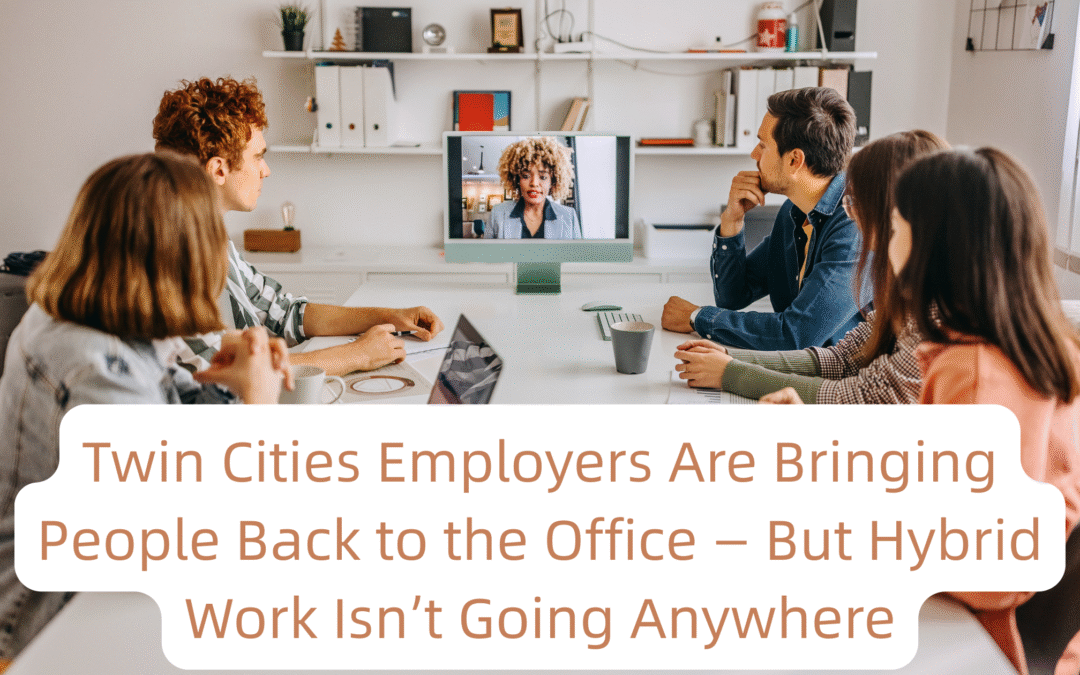
More and more companies in the Twin Cities are asking employees to return to the office. What started as a slow shift has gained momentum as major employers like 3M, U.S. Bank, and General Mills update their remote work policies. This local trend reflects a national movement toward more structured in-person work, as both private companies and government agencies roll back fully remote options.
Even with this shift, the five-day office workweek still isn’t the norm. Most businesses are choosing hybrid schedules — typically two or three days a week in the office — while leaving room for remote work where it makes sense. The push for in-person time often centers around rebuilding workplace culture, improving collaboration, and making use of existing office space. For many companies, it’s also about supporting the vibrancy of downtown and commercial areas that took a hit during the pandemic.
At the same time, remote and hybrid work continue to appeal to employees who value flexibility. It gives people the ability to manage their responsibilities at home while still contributing meaningfully at work. While some workers have returned to the office with renewed energy, others report that in-person days often involve the same virtual meetings they would attend from home.
Even as more defined office policies take shape, there’s no one-size-fits-all approach. The landscape is settling into a mix of onsite, hybrid, and remote work based on each company’s goals and the needs of their teams. The common thread is a move toward greater clarity — not necessarily more control. And that signals a future of work that’s more intentional than reactive.