
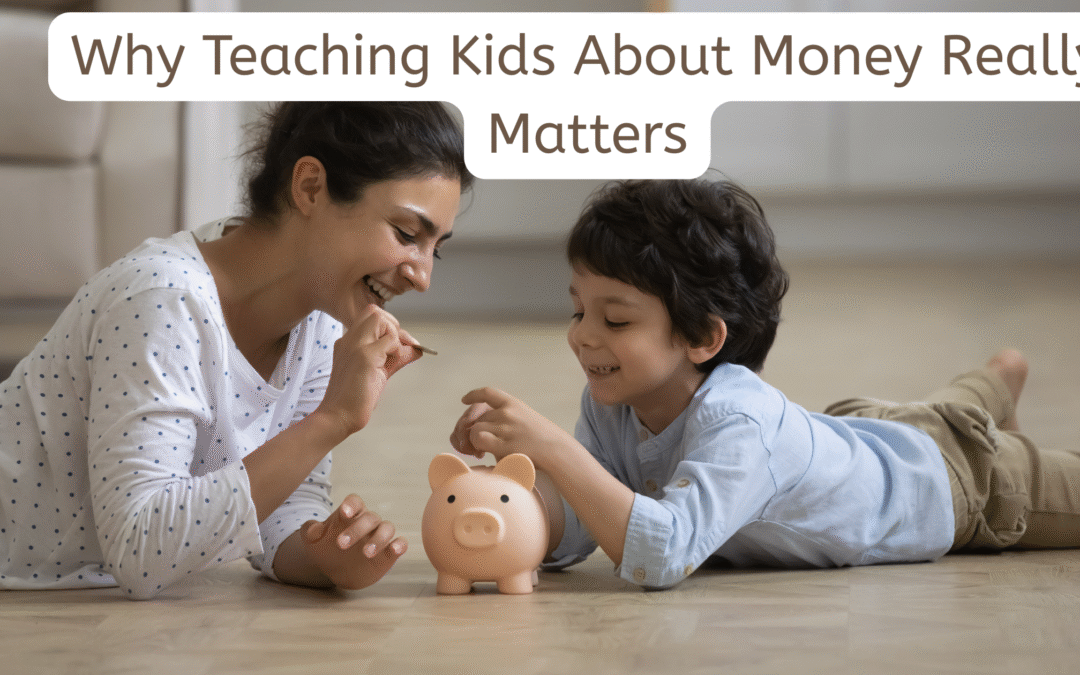
If you ever wonder whether talking to your kids about money is worth it, the answer is yes — absolutely. What you learn (or don’t learn) about money as a child can shape your habits well into adulthood. Things like budgeting, saving, and even negotiating a salary often trace back to how comfortable and confident someone feels with money — and that usually starts at home.
A recent survey found that people who were exposed to basic financial lessons growing up — like learning how to manage a budget, save for something big, or just talk openly about money — were more likely to make smart financial decisions as adults. That’s not a coincidence.
Financial literacy isn’t just about knowing how money works — it helps kids build independence, confidence, and self-trust. On the flip side, many adults carry a quiet fear or shame around money, not because they’re bad at it, but because no one ever taught them. When kids grow up without those lessons, they may think they’re “just not good with money,” when really, they just never got a chance to learn.
How parents can approach money conversations with their kids
You don’t need to turn your house into a finance class. Start small and make it part of everyday life. Let them sit with you while you pay bills. Show them how you plan for groceries or save up for a vacation. Explain the “why” behind financial decisions in simple terms.
If they earn an allowance, talk about how they can split it into spend/save/give categories. If they’re older, let them help compare prices while shopping or look at phone plans. The goal isn’t perfection — it’s helping them feel comfortable asking questions and making choices.
You don’t have to be a money expert to begin the conversation. What matters most is modeling healthy habits and keeping the dialogue open. Even if you didn’t grow up with this kind of guidance yourself, you can still break the cycle. It’s never too late — and those small talks can make a big difference in your child’s future.